Introduction
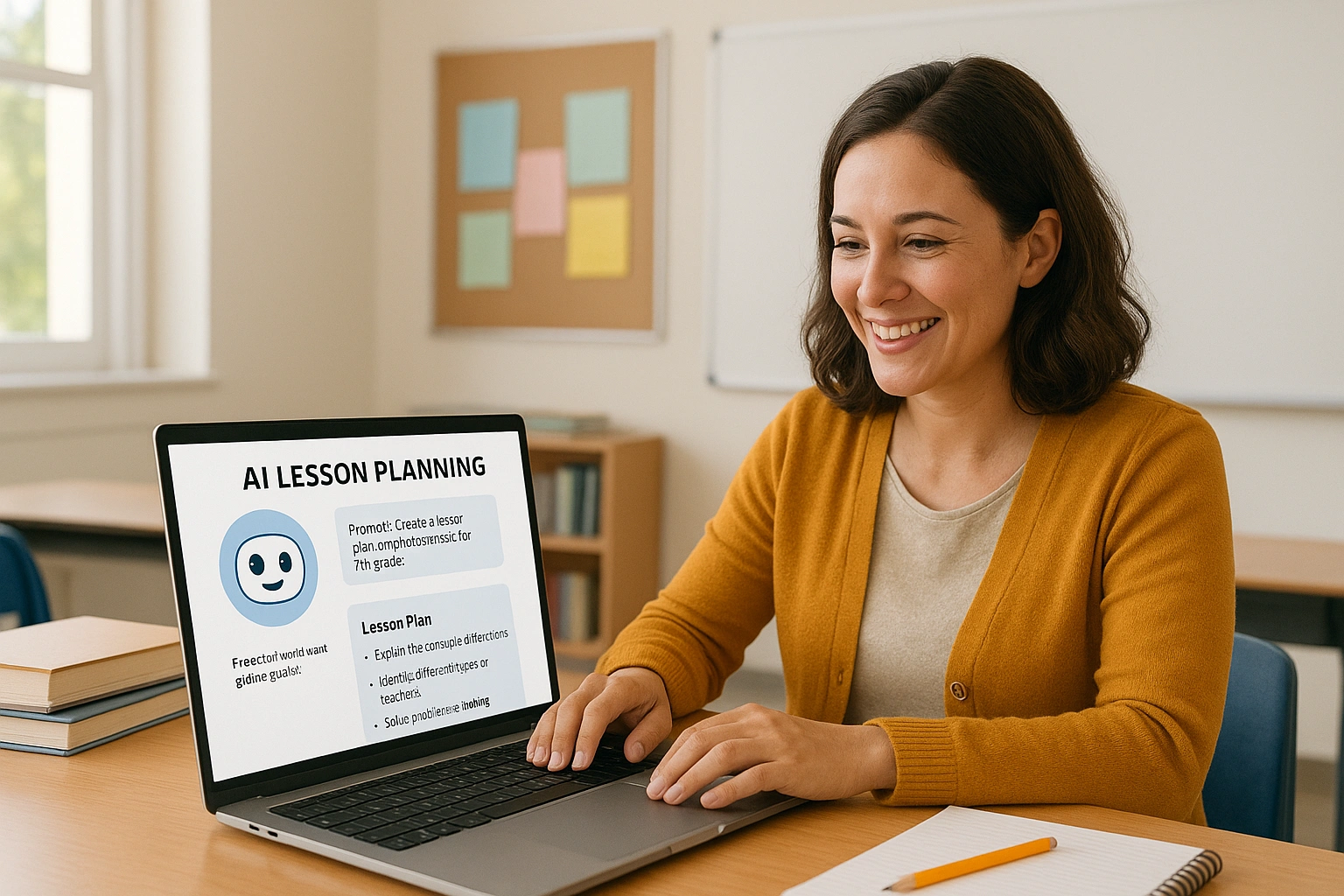
What Are AI Lesson Planning Apps?
The relevance of these tools has exploded in 2025 due to a “perfect storm” of factors: increased teacher workloads, a greater emphasis on personalized learning, and the need for cost-effective school solutions. According to a 2024 Statista report, the global market for AI in education is projected to grow exponentially, with a significant portion focused on tools that directly support teachers. This trend highlights a fundamental shift toward using technology to augment, not automate, the art of teaching. These affordable AI lesson planning apps are at the forefront of this revolution.
Why These Budget AI Teaching Tools Are a Game-Changer
Adopting new technology can seem daunting, especially with tight school budgets. However, the return on investment from these platforms is measured in saved time, reduced stress, and improved student outcomes.
Save Dozens of Hours Weekly
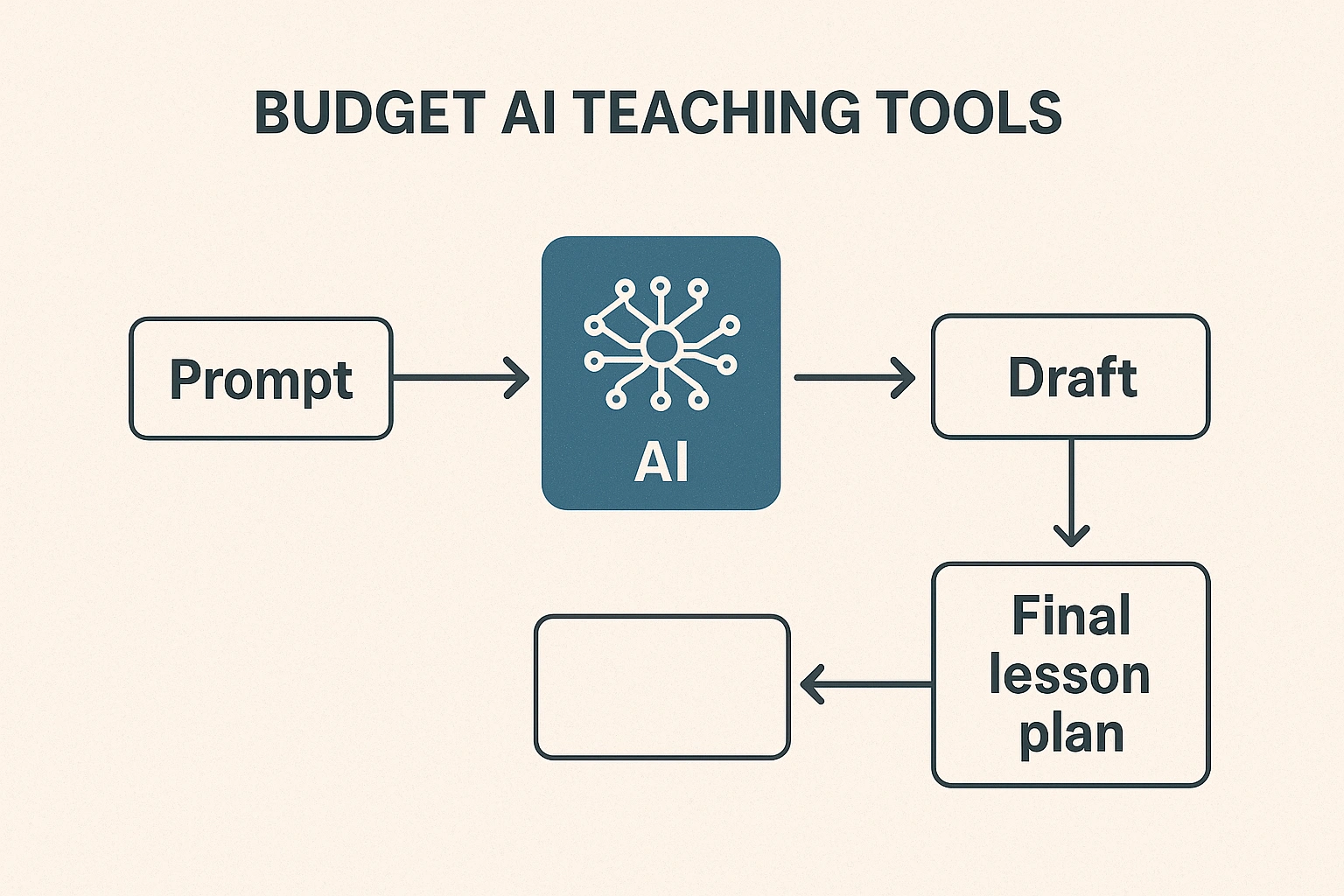
The most immediate benefit is time reclamation. Instead of starting from scratch, you provide the AI with your topic, learning objectives, and grade level. It can then generate a comprehensive first draft in seconds.
- Automate Tedious Tasks: Generate rubrics, discussion prompts, and vocabulary lists instantly.
- Rapid Differentiation: Create leveled reading passages or modified assignments for diverse learners with a single click.
- Streamline Administrative Work: Draft parent-teacher communication, syllabus outlines, and project briefs.
Unlock Hyper-Personalized Learning at Scale
Differentiation is the gold standard of effective teaching, but it’s incredibly time-consuming. AI makes it feasible for every student. You can create unique learning paths tailored to individual needs, interests, and skill levels without spending your entire weekend planning. While these tools help manage classroom time, efficiently managing school budgets is also crucial. For insights into financial management, consider exploring resources on comprehensive financial reporting.
Boost Student Engagement and Creativity
Stuck in a creative rut? AI can be an endless well of inspiration. These tools can suggest gamified quizzes, project-based learning ideas, and interactive activities that capture students’ attention. By handling the structural part of planning, they free up your mental energy to focus on crafting truly memorable and engaging learning experiences.
How Do Affordable AI Lesson Planning Apps Work?
The process is surprisingly intuitive and user-friendly. Most platforms follow a simple, multi-step workflow that feels more like a conversation than a complex software operation.
- Step 1: Input Your Core Objective: You start by telling the AI what you need. This could be a simple prompt like, “Create a 45-minute lesson plan on the water cycle for 4th graders.”
- Step 2: Define Your Parameters: Next, you can add constraints and details. Specify learning standards (e.g., Common Core, NGSS), required materials, desired assessment type (e.g., multiple-choice quiz, short essay), and any differentiation needs.
- Step 3: Generate and Refine: The AI processes your request and produces a detailed output. This is where the human element is key. You review the generated plan, tweak the language, adjust activities, and ensure it aligns perfectly with your teaching style and students’ needs.
- Step 4: Export and Integrate: Once you’re satisfied, you can export the plan as a PDF, Word document, or even directly into your Learning Management System (LMS) like Google Classroom.
Real-Life Use Case: A Review of MagicSchool AI
To give you a practical example, I spent a week integrating MagicSchool AI, one of the most popular affordable AI lesson planning apps, into my 9th-grade history class. My goal was to create a fully differentiated unit on the Industrial Revolution.
The platform’s interface was clean and packed with specialized tools. I started with the “Lesson Plan Generator,” inputting my core topic and state standards. Within 30 seconds, I had a solid, week-long outline. The real magic happened when I used the “Text Leveler Tool.” I took a complex primary source document about factory conditions and instantly generated three versions: one at the original level, one simplified for struggling readers, and one with advanced vocabulary for high-achievers.
| Pros | Cons |
|---|---|
| ✅ Massive library of teacher-specific tools. | ❌ The free version has daily usage limits. |
| ✅ Intuitive and easy for beginners to learn. | ❌ Can sometimes produce generic or repetitive text. |
| ✅ Strong focus on pedagogy and best practices. | ❌ Requires careful fact-checking of generated content. |
| ✅ Excellent tools for differentiation. |
Overall, the tool easily saved me 8-10 hours of work. It didn’t replace my professional judgment, but it acted as an incredibly efficient assistant, handling the heavy lifting of content creation.
Comparison of the Top Affordable AI Lesson Planning Apps in 2025
Choosing the right tool depends on your specific needs and budget. Here’s a breakdown of three leading contenders in the affordable category.
| Tool | Key Features | Pros | Cons | Best For |
|---|---|---|---|---|
| MagicSchool AI | 50+ tools, rubric generator, text leveler, YouTube video summerizer | Extremely comprehensive, strong community support | Free version is limited | K-12 teachers needing an all-in-one solution |
| Education Copilot | Focus on generating worksheets, project outlines, and educational handouts | Excellent for creating student-facing materials quickly | Fewer pedagogical tools than MagicSchool | Teachers who need to generate materials fast |
| Curipod | Interactive slide decks, polls, word clouds, gamified learning | Fantastic for creating engaging, interactive lessons | Less focused on traditional lesson plan documents | Educators looking to boost student participation |
Common Mistakes to Avoid When Using AI
These tools are powerful, but they aren’t foolproof. To get the most out of them, avoid these common pitfalls:
- Blindly Trusting AI Output: Always review and fact-check everything. AI can occasionally “hallucinate” or provide inaccurate information. You are still the expert in the room.
- Ignoring Curriculum Standards: Use the AI to meet your standards, not to bypass them. Ensure every generated lesson aligns with your district’s and state’s requirements.
- Overlooking Student Privacy: Be cautious about inputting any sensitive student information into any online platform. Stick to lesson content and anonymized data.
- Using It as a Crutch, Not a Tool: The goal is to augment your teaching, not automate it. The best results come from a partnership between your expertise and the AI’s efficiency.
- Sticking to a Single Prompt: Don’t be afraid to regenerate, refine, and re-prompt. Ask the AI to “make it more engaging,” “simplify the language,” or “add a creative writing component.”
Expert Tips & Best Practices
“The goal isn’t to replace the teacher; it’s to augment their expertise. The best budget AI teaching tools are the ones that free you from clerical work so you can focus on the human connections that are the heart of learning.”
— Dr. Evelyn Reed, Digital Curriculum Specialist
Here are her top tips:
- Start Small: Begin by using AI for one task, like creating exit tickets or discussion prompts, before moving on to full lesson plans.
- Build a Prompt Library: Save your most effective prompts in a document so you can reuse and refine them over time.
- Train the AI on Your Style: Provide the tool with examples of your past lesson plans and ask it to “write in a similar style.”
- Collaborate with Colleagues: Share what works. A prompt that generates a great science lab outline might be adaptable for a history project.
- Use AI for Self-Reflection: Ask the AI to analyze your lesson plan and suggest areas for improvement or greater student engagement.
Frequently Asked Questions (FAQ)
Q: Are these AI lesson planning tools free?
A: Most offer a “freemium” model. This means they have a robust free version with certain limitations (e.g., a cap on daily generations) and a paid subscription that unlocks unlimited access and advanced features. The paid plans are generally affordable for individual teachers or school departments.
Q: Can AI planners create an entire year’s curriculum?
A: While they can certainly help outline and structure a full curriculum, they are best used for creating individual lessons and units. The strategic, long-range planning and sequencing still benefit most from a human educator’s touch.
Q: How do these apps handle different learning standards (e.g., Common Core)?
A: Most high-quality apps allow you to specify which educational standards you’re targeting. The AI will then generate content specifically aligned with those standards, often citing the exact code (e.g., CCSS.ELA-LITERACY.W.9-10.1).
Q: Is the content generated by AI original and plagiarism-free?
A: Yes, the content is generated uniquely for each prompt and is not copied from other sources, so it will pass plagiarism checkers. However, the ideas and information are based on the vast amount of data the AI was trained on, so the concepts themselves won’t be new.
Q: What is the best affordable AI lesson planning app for a complete beginner?
A: For beginners, MagicSchool AI or Education Copilot are excellent starting points. They have very intuitive interfaces and a wide range of easy-to-use tools that provide immediate value without a steep learning curve.