Introduction
We hear about AI in education constantly, but what does success actually look like? The clearest answers come from AI education case studies that show real outcomes in classrooms. Instead of just buzzwords like “personalization” or “automation,” AI education case studies provide concrete evidence of how these tools work in practice. For educators who ask where the proof lies, AI education case studies highlight measurable results that go beyond theory and bring clarity to the discussion.
This article cuts through the noise. We are diving deep into real AI education case studies that showcase tangible results and proven AI success in schools. These AI education case studies reveal how graduation rates improve in large universities while also enabling personalized tutoring in elementary classrooms. By exploring multiple AI education case studies, you’ll see how technology delivers measurable impact across different levels of learning. In the end, these AI education case studies provide clarity on what works, the challenges to anticipate, and how models can be adapted for your own institution.
What Defines an AI Education Case Study?
An AI education case study is a detailed analysis of the implementation and outcomes of artificial intelligence technologies within a specific educational context. Unlike theoretical discussions, AI education case studies are grounded in real-world data and experiences that highlight both successes and challenges. A comprehensive look at AI education case studies examines how schools adapt, what results they achieve, and the lessons that can guide future adoption. By focusing on AI education case studies, educators gain practical insights that move beyond abstract concepts and into strategies that truly work.
- The Challenge: A clear definition of the pedagogical or administrative problem the institution aimed to solve.
- The AI Solution: The specific technology or platform that was implemented to address the challenge.
- The Implementation Process: The strategy for adoption, including teacher training, student onboarding, and integration with existing systems.
- The Measurable Results: The tangible, data-backed outcomes, such as changes in test scores, engagement levels, or graduation rates.
In 2025, these studies are more critical than ever. As the EdTech market becomes saturated, evidence-based success stories are the gold standard for decision-makers. According to reports from sources like TechCrunch, school districts are increasingly demanding proof of efficacy before investing in new technologies. These case studies provide that proof, moving AI from a promising idea to a proven tool for educational advancement.
5 Compelling AI Education Case Studies
Case Study 1: Georgia State University’s Predictive Analytics
The Challenge: Georgia State University (GSU) faced a common crisis among large public universities: student retention. Insights from AI education case studies reveal how predictive analytics can flag at-risk students before problems escalate. By learning from similar AI education case studies, GSU implemented early intervention systems that addressed both academic and financial challenges. These AI education case studies show that when technology is applied strategically, institutions can significantly reduce dropout rates and create more supportive pathways for student success.
The AI Solution: GSU implemented a predictive analytics platform that tracks 800 different risk factors for every undergraduate student in real-time. The system, powered by machine learning, flags students who are showing early signs of trouble—like registering for a course that doesn’t fit their major, a slight dip in grades, or even unpaid fees. This triggers an immediate alert to an academic advisor, who can then intervene with targeted support, often within 48 hours.
The Results: The impact has been transformative and is widely cited as a landmark for **AI success in schools**. According to data published by the university and covered by publications like Wired:
- Graduation rates increased by over 20 percentage points.
- The achievement gap between minority and white students was completely eliminated.
- The university saved millions in lost tuition fees and increased state funding tied to graduation rates.
Case Study 2: Personalized Tutoring with Khanmigo in K-12
The Challenge: A recurring problem in K-12 education is providing individualized support in a classroom of 30+ students. Teachers cannot be everywhere at once, and students who are struggling can quickly fall behind, while advanced students can become bored and disengaged.
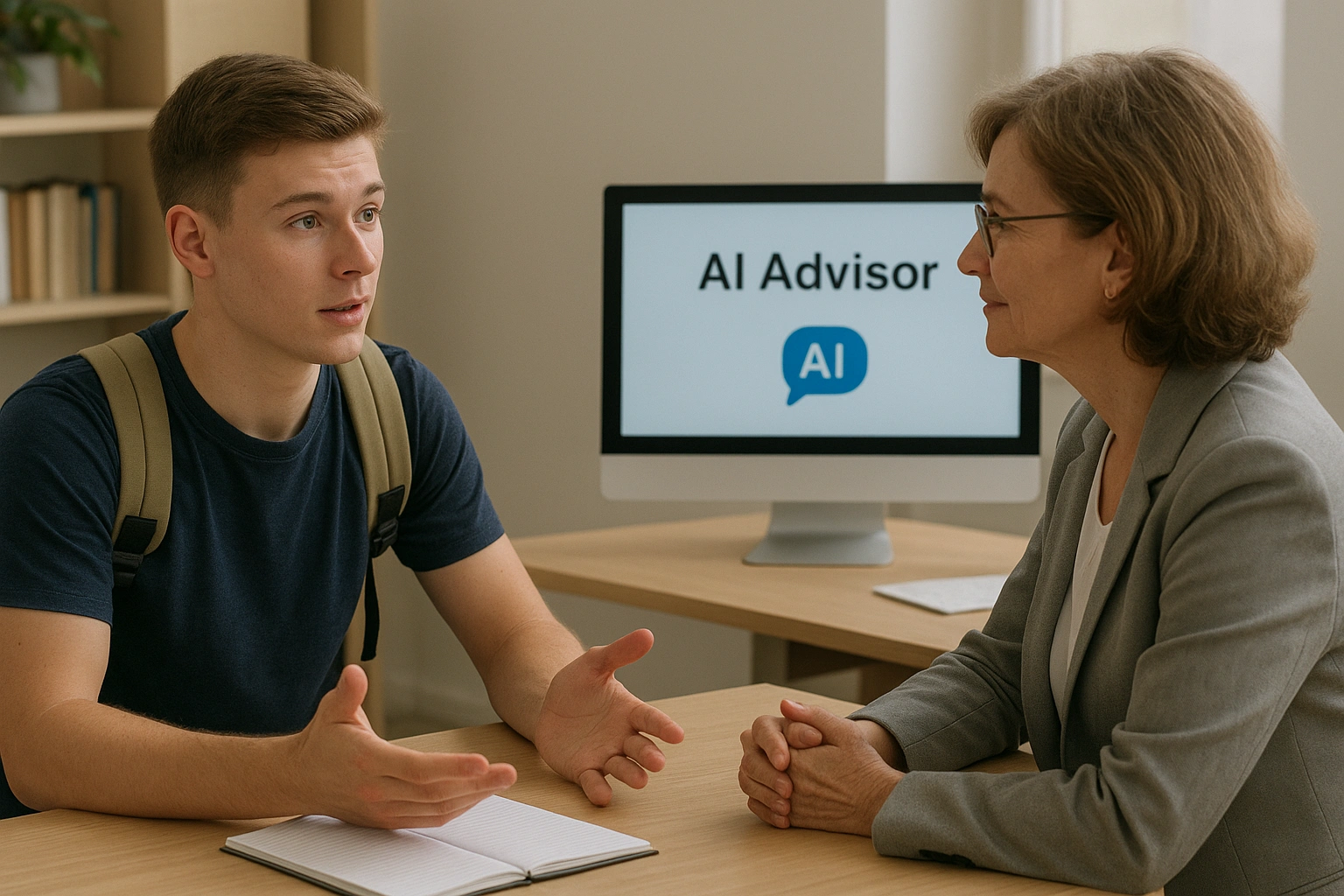
The AI Solution: Several school districts, including the Newark Public School system, have piloted Khanmigo, Khan Academy’s AI-powered tutor and teaching assistant. For students, it acts as a Socratic tutor, guiding them through problems without giving away the answer. For teachers, it’s a powerful assistant that can generate lesson plans, create exit tickets, and write progress reports in minutes.
The Results: Early results from pilot programs are highly encouraging and demonstrate clear benefits:
| Metric | Impact |
|---|---|
| Student Engagement | Increased time-on-task and voluntary practice, with students actively seeking help from the AI tutor. |
| Teacher Workload | Teachers in the program reported saving an average of 5-10 hours per week on lesson planning and administrative tasks. |
| Learning Outcomes | Pilots show accelerated progress in math and writing skills. Just as a good financial report helps a business, good data helps a school. |
Case Study 3: Duolingo’s Hyper-Personalized Language Learning
The Challenge: Teaching a language effectively requires constant personalization. Every learner has different strengths, weaknesses, and learning speeds. Scaling this personalization to hundreds of millions of users was Duolingo’s primary challenge.
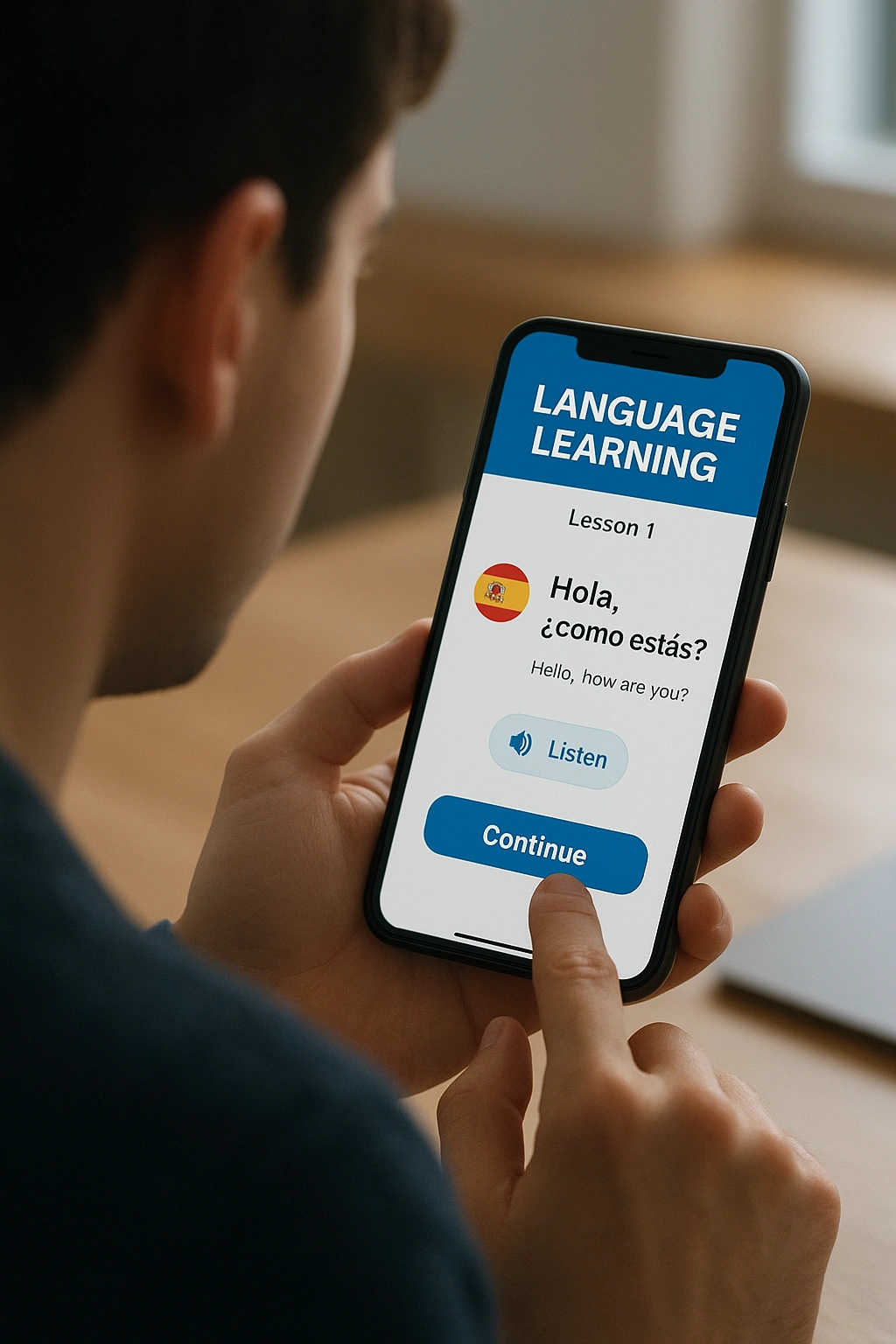
The AI Solution: Duolingo built an AI model nicknamed “Birdbrain,” which analyzes every answer from every user to predict the probability that a user will get an exercise right or wrong. This allows the app to tailor the difficulty of each lesson in real-time, creating an optimal learning path for each individual. It’s one of the largest-scale **AI education case studies** in the world.
The Results: The data-driven approach has led to industry-leading results:
- High Engagement: Millions of users complete billions of exercises each month due to the gamified and personalized experience.
- **Proven Efficacy:** Internal studies, corroborated by external research, show that completing five sections of Duolingo can be equivalent to five semesters of university-level language instruction.
- **Continuous Improvement: The AI model is constantly updated with new data, meaning the learning experience gets more effective and personalized over time.
Case Study 4: Carnegie Learning’s MATHia for Deep Math Understanding
The Challenge: Many students learn math through rote memorization, leading to a shallow understanding that fails when they encounter complex, real-world problems. The challenge was to create a tool that teaches the “why” behind the math, not just the “how.”
The AI Solution: Carnegie Learning developed MATHia, an AI-powered platform that provides a 1-to-1 coaching experience. Unlike systems that just mark answers right or wrong, MATHia’s AI analyzes the *process* a student uses to solve a problem. It provides real-time hints, feedback, and encouragement, modeling how an expert human tutor would guide a student toward conceptual understanding.
The Results: Multiple independent studies, including a major one by the RAND Corporation, have validated its effectiveness:
- Students using MATHia showed learning gains nearly double that of students in control groups using traditional curricula.
- The platform has been particularly effective in helping underperforming students catch up to their peers.
- The **AI success in schools** using this tool demonstrates that AI can foster deep conceptual learning, not just surface-level skills.
Case Study 5: Squirrel AI and Adaptive Learning at Scale
The Challenge: In China’s highly competitive education system, providing high-quality, personalized tutoring is a major industry. However, access to the best human tutors is limited and expensive, creating an equity gap.
The AI Solution: Squirrel AI developed a hyper-adaptive learning system that deconstructs subjects like math into thousands of micro-concepts. Through an initial diagnostic test, the AI identifies a student’s precise knowledge gaps. It then creates a completely customized lesson plan, focusing only on the concepts the student doesn’t know, saving immense amounts of time.
The Results: While some of its claims have been debated, the company has reported significant results from its learning centers across China:
- In a controlled study, students taught by the AI system showed greater average test score improvements than students taught by human teachers over the same period.
- The platform has provided affordable, personalized tutoring to millions of students, democratizing access to supplemental education.
- This case study highlights the potential of AI to deliver personalized instruction on a massive scale.
Common Themes in Successful AI Implementations
Analyzing these **AI education case studies** reveals a clear pattern for success:
- Problem-First, Not Tech-First: Each successful implementation started with a clear, well-defined educational problem (e.g., retention, teacher workload, conceptual gaps) rather than a desire to simply use a trendy piece of technology.
- Human-in-the-Loop Design: The AI was designed to augment and empower educators, not replace them. The technology provides data, automates tedious tasks, and offers personalized support, allowing humans to focus on mentoring, inspiring, and addressing complex social-emotional needs.
- Strong Teacher Training: Schools that saw the most success invested heavily in professional development, ensuring teachers understood not just how to use the tools, but how to integrate them into their pedagogy effectively.
- Iterative Rollout and Data Culture: They started with pilot programs, gathered feedback, and scaled the solution gradually. They fostered a culture where data from the AI was used to inform and improve teaching strategies continuously.
FAQ Section
What is the biggest barrier to AI success in schools?
The biggest barrier is often cultural, not technical. A lack of teacher buy-in, inadequate training, and a fear of change can derail even the most promising AI implementation. Successful projects prioritize people and pedagogy over the technology itself.
How do schools measure the ROI of an AI tool?
ROI is measured through a combination of metrics: academic metrics (test scores, course completion), engagement metrics (time-on-task, attendance), efficiency metrics (teacher time saved), and financial metrics (student retention, reduced need for interventions).
Are these solutions only for wealthy schools?
Not necessarily. While some platforms require significant investment, many powerful tools (like Khanmigo) are designed to be affordable and scalable. Furthermore, the long-term savings from increased efficiency and retention can often offset the initial cost, making it a viable option for a range of budgets.
What’s the first step to implementing an AI project?
The first step is to identify a single, specific, and pressing problem that you want to solve. Form a small, dedicated team of teachers, IT staff, and administrators to research and pilot potential solutions on a small scale before considering a full rollout.
How do these case studies address ethical concerns like data privacy?
Leading institutions like Georgia State have robust data governance policies. They anonymize student data wherever possible and have strict protocols for who can access sensitive information. Ethical implementation requires a commitment to transparency and using data solely for the purpose of improving student outcomes.
Conclusion
As these AI education case studies show, the successful use of artificial intelligence in classrooms is no longer a distant dream. Real institutions are achieving measurable progress, and AI education case studies highlight how schools solve challenges like student disengagement and teacher burnout. The key lesson from AI education case studies is that technology works best when it supports teachers and strengthens clear learning goals. By reflecting on AI education case studies, educators can move beyond the hype and start shaping smarter, more equitable classrooms for all learners.