Introduction
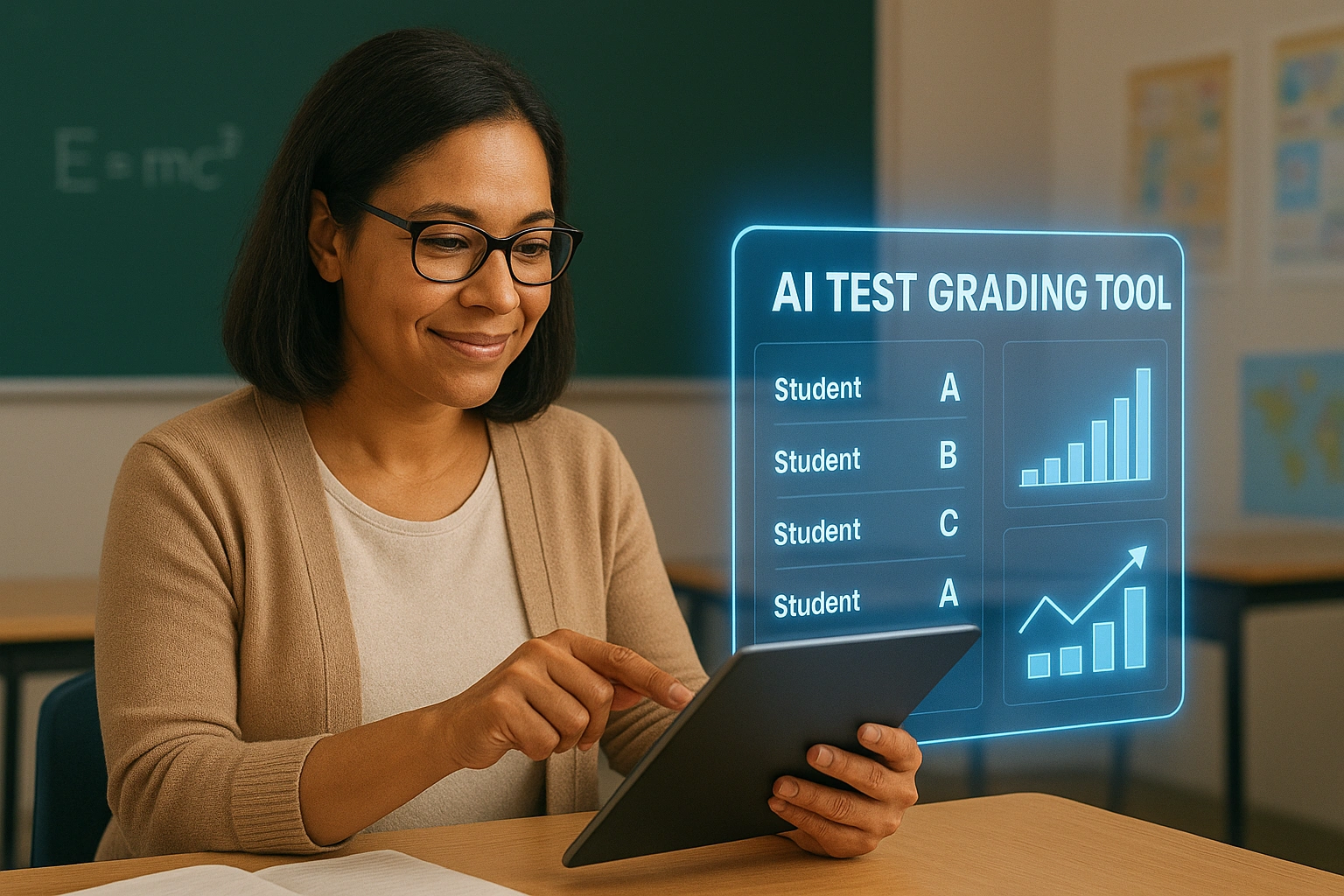
Did you know that teachers, on average, spend over five hours per week just on grading? With AI test grading tools, this administrative burden can be drastically reduced, freeing educators to focus on teaching. In 2025, AI test grading tools are no longer a distant concept—they are transforming classrooms by automating assessments and providing instant feedback. By leveraging AI test grading tools, teachers gain deeper insights into student performance, and with AI test grading tools handling repetitive tasks, educators can spend more time on meaningful instruction and student connection.
What Are AI Test Grading Tools?
The relevance of these tools has skyrocketed in 2025. As classrooms become more digitized and personalized learning takes center stage, educators need scalable solutions. According to a report by Statista, the global AI in education market is projected to grow exponentially, signaling a massive shift in how we approach educational technology. These AI exam assessment apps are no longer just about speed; they’re about providing consistent, unbiased, and data-rich feedback that was previously impossible to achieve at scale.

Why AI Grading Matters: The Core Benefits
Reclaim Dozens of Hours Weekly
The most immediate benefit is the drastic reduction in time spent on manual grading. Instead of spending nights and weekends with a red pen, educators can offload the repetitive aspects of assessment. This reclaimed time can be reinvested into lesson planning, one-on-one student mentoring, and professional development.
Provide Instant, Consistent Feedback
Students thrive on timely feedback. Waiting days or weeks for a graded paper diminishes the learning opportunity. AI tools can provide instant results, allowing students to understand their mistakes while the material is still fresh in their minds. Key benefits include:
- Immediate Reinforcement: Students see what they got right and wrong instantly.
- Reduced Anxiety: The long, anxious wait for grades is eliminated.
- Continuous Learning: Feedback becomes part of the learning process, not just a final judgment.
Uncover Deeper Student Insights
Modern AI exam assessment apps are powerful analytical engines. They can process results from an entire class in seconds, identifying common misconceptions, knowledge gaps, and performance trends. An educator can quickly see which topics the class struggled with the most, enabling them to adjust their teaching strategy for the next lesson. This data-driven approach moves beyond individual scores to holistic classroom understanding.
Enhance Grading Objectivity and Fairness
Unconscious bias is a real challenge in manual grading. Factors like handwriting, previous performance, or even fatigue can subtly influence a grader’s judgment. AI, on the other hand, evaluates every submission against the same pre-defined rubric with perfect consistency. This ensures that every student’s work is judged solely on its merit, fostering a fairer and more equitable learning environment. For a deeper dive into the financial benefits and cost analysis of such tools, understanding financial reports can provide a clearer picture of the return on investment for educational institutions.
How Do AI Exam Assessment Apps Work?
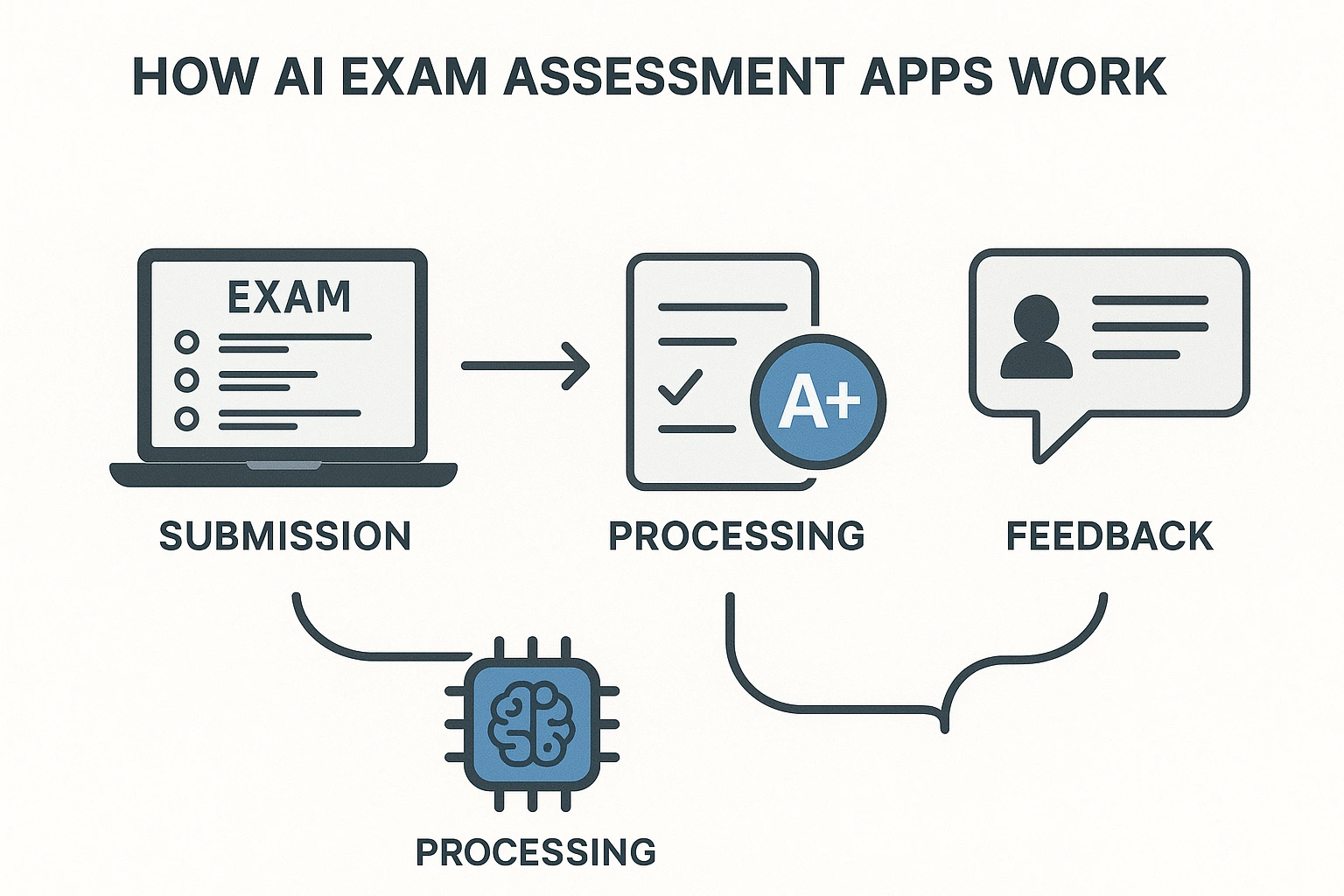
The magic behind AI grading lies in a combination of sophisticated technologies. While the user interface is simple, the backend processes are complex and powerful. Here’s a step-by-step breakdown:
- Input & Digitization: Student responses, whether typed or handwritten, are fed into the system. For physical papers, Optical Character Recognition (OCR) technology converts handwriting into digital text.
- Natural Language Processing (NLP): This is the core engine for grading essays and short answers. NLP algorithms break down sentences, analyze grammar, identify keywords, and understand the semantic meaning of the text.
- Model Training & Rubric Alignment: Before grading, the educator “trains” the AI. They provide it with a rubric and a set of sample papers that have been graded manually. The AI learns what constitutes a good, average, and poor answer based on these examples.
- Scoring & Feedback Generation: The AI compares each new submission against the trained model and rubric. It assigns a score and can often generate specific feedback, highlighting areas of strength and weakness.
- Analytics & Reporting: All the data is aggregated into an analytics dashboard, where educators can view performance reports for individual students, the entire class, or specific questions.
In-Depth Review: GradeGenius AI
To give you a real-world perspective, I spent a week testing GradeGenius AI, one of the leading platforms in 2025. My goal was to see if it lived up to the hype in a real classroom setting with a mix of multiple-choice and short-answer history quizzes.
The setup was surprisingly intuitive. I created a quiz, defined my rubric for the short-answer questions, and uploaded a few sample answers to calibrate the AI. The first batch of 30 quizzes was graded in under two minutes. The accuracy for multiple-choice was perfect, as expected. For the short-answer questions, I was impressed. The AI correctly identified the key historical figures and events I was looking for and was about 95% aligned with my own grading. I only had to manually adjust two scores where the student’s phrasing was particularly creative.
The analytics dashboard was the real star. It immediately flagged a question that over 60% of students answered incorrectly, signaling that I needed to revisit that topic in my next class.
| Pros | Cons |
|---|---|
| Incredibly fast and accurate | Requires initial time investment for setup |
| Powerful analytics dashboard | Subscription can be pricey for individuals |
| Supports multiple question types | May struggle with highly nuanced subjects |
| Integrates with major LMS platforms | Students may be wary of AI grading |
Comparison of the Top AI Test Grading Tools in 2025
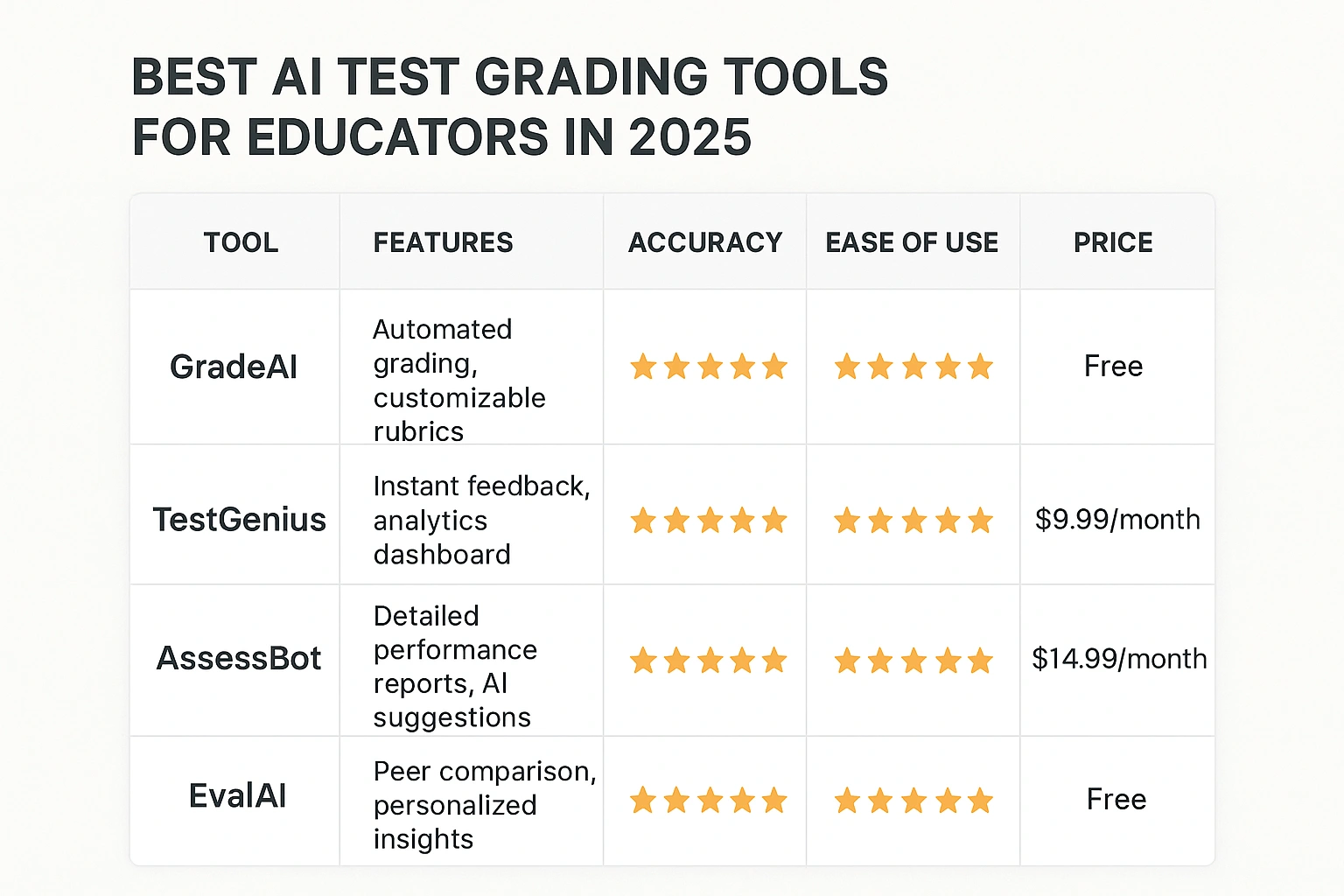
Choosing the right tool depends on your specific needs, subject matter, and budget. Here’s a comparison of some of the best options available.
| Tool | Key Features | Pros | Cons | Best For |
|---|---|---|---|---|
| GradeGenius AI | NLP essay grading, LMS integration, analytics | High accuracy, user-friendly | Premium pricing | Higher education & high schools |
| AssessBot | OCR for handwritten work, multi-language support | Excellent for physical exams | Basic analytics | K-12 schools transitioning from paper |
| FeedbackLoop | Focus on formative feedback, plagiarism checker | Promotes student learning, robust | Slower grading speed | Writing-intensive courses (English, History) |
| ExamWise | STEM-focused, grades complex equations, code | Unmatched for technical subjects | Steep learning curve | University STEM departments |
| QuickScore | Free tier, simple multiple-choice & short answer | Accessible and easy to use | Limited features, basic AI | Individual teachers or low-stakes quizzes |
Common Mistakes to Avoid When Adopting AI Graders
Transitioning to AI grading can be seamless, but a few common pitfalls can hinder its effectiveness.
- Skipping the Calibration Step: Don’t just upload a rubric and expect perfection. You must train the AI with sample papers to ensure it understands your specific standards.
- Using It for Highly Subjective Assignments: AI excels at grading fact-based responses. For assignments that rely heavily on creativity, personal reflection, or nuanced argument (like poetry analysis), human oversight is still essential.
- Not Informing Students: Be transparent with your students. Explain how the tool works, why you’re using it, and that you will always have the final say on grades. This builds trust and alleviates anxiety.
- Ignoring the Analytics: The tool’s greatest power isn’t just grading; it’s the data it provides. Regularly check the analytics dashboard to inform your teaching.
- Setting It and Forgetting It: Periodically review the AI’s performance. Check a small sample of graded papers manually to ensure the tool remains accurate and aligned with your expectations.
Expert Tips for Maximizing AI Grading Tools
To truly get the most out of these platforms, go beyond the basics.
“Build confidence in the system—for both you and your students—by first using the AI on quizzes or homework before applying it to major exams,”
- Create Ultra-Clear Rubrics: The more detailed and objective your rubric, the more accurate the AI will be. Avoid vague criteria like “shows good understanding.”
- Use AI for a “First Pass”: For complex essays, let the AI handle the initial grammar, spelling, and structure check. This frees you up to focus on the deeper elements of the student’s argument.
- Combine AI and Peer Review: Have the AI provide the initial objective score, then use a peer-review session for students to give qualitative feedback.
- Leverage Plagiarism Checkers: Most top-tier tools include a plagiarism checker. Use it to uphold academic integrity and teach students about proper citation.
Frequently Asked Questions (FAQ)
Q: Can AI accurately grade complex subjects like literature or philosophy?
A: While AI is improving, it is most accurate for subjects with objective answers (STEM, history, law). For highly subjective fields, it’s best used as an assistant to check for grammar, structure, and basic concepts, with a human providing the final, nuanced evaluation.
Q: Are AI test grading tools expensive?
A: Costs vary widely. Some tools offer free basic tiers, while comprehensive platforms for entire school districts can be a significant investment. However, many institutions find the return in saved time and improved data makes it worthwhile.
Q: Will AI replace human teachers in grading?
A: No. The goal of these tools is not to replace educators but to augment their capabilities. The final judgment, empathy, and mentorship can only come from a human teacher. AI is a powerful assistant, not a replacement.
Q: How do these tools handle student data privacy?
A: Reputable platforms use robust encryption and adhere to educational privacy laws like FERPA. It’s crucial to choose a provider with a clear and transparent privacy policy.
Q: Can students cheat the AI?
A: Developers are constantly working to stay ahead of methods to “game” the system. AI can often detect keyword stuffing or irrelevant text better than a tired human grader. However, no system is foolproof, and human oversight remains important.
Conclusion
The era of spending countless hours on repetitive grading is ending, thanks to AI test grading tools. In 2025, AI test grading tools provide a smart solution for one of education’s biggest challenges. By using AI test grading tools, educators can automate assessments, give instant feedback, and gain actionable insights. With AI test grading tools handling routine tasks, teachers can focus their energy on meaningful instruction and connecting with students, while still maintaining human oversight for a balanced, efficient, and data-driven classroom.
Ready to explore more ways technology is shaping the future? Check out the latest research from Google AI’s education division.